
TURN COMPLEXITY INTO CLARITY
WITH VISUAL SOFTWARE DEVELOPMENT
Fimaflow is your visual platform
for building backend systems.
Visually design workflows, model data, define business logic, manage authentication, connect services, and deploy scalable backend systems, all from a single interface.
Building complete backend systems for modern development teams.
From data models and business logic to workflows, authentication, services, deployment, and documentation, Fimaflow gives teams a unified environment to design, build, and evolve complete backend systems — without sacrificing architecture, flexibility, or code quality.
Backend frameworks supported
Unified model from design to code
Backend architectures from monoliths to microservices
Exportable source code ownership
From idea to production and beyond.
Fimaflow covers the entire software lifecycle, from ideation to maintenance, so you can design, build, deploy, and evolve your applications within a single environment.
 01 / 08
Step 1
Ideation
Turn an idea into a clear vision of the product and the problem to solve.
 02 / 08
Step 2
Requirements Analysis
Turn product needs into concrete functional and technical requirements.
 03 / 08
Step 3
Design
With Fimaflow, visually design your application's architecture and define how its different components will work together.
 04 / 08
Step 4
Development
With Fimaflow, turn your design into backend workflows and code ready to integrate into your application.
 05 / 08
Step 5
Testing
Validate the application's behavior and make sure every component works as expected before going to production.
 06 / 08
Step 6
Deployment
Move from validated software to an application available to its users, with production-ready infrastructure.
 07 / 08
Step 7
Operations
Once in production, monitor the application and its workflows to ensure availability, performance, and reliability.
 08 / 08
Step 8
Maintenance & Evolution
Continuously evolve the software by fixing issues, adding new features, and adapting its architecture.
Built for how modern software is engineered.
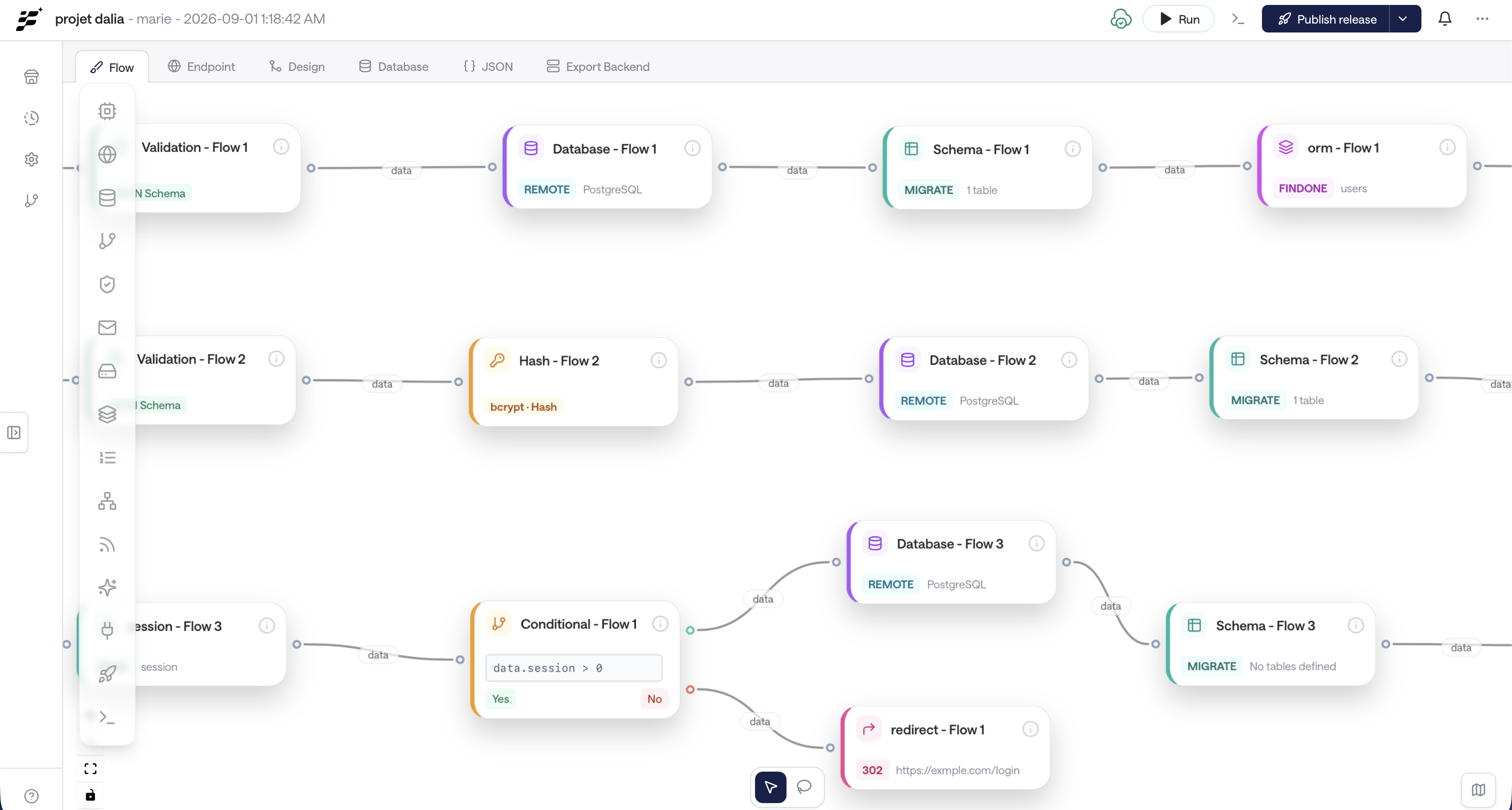
Visual Backend Engineering
Design backend systems as visual, executable workflows. Connect inputs, business logic, validations, services, data operations, integrations, and outputs to define how your system behaves while keeping the underlying architecture explicit and understandable.
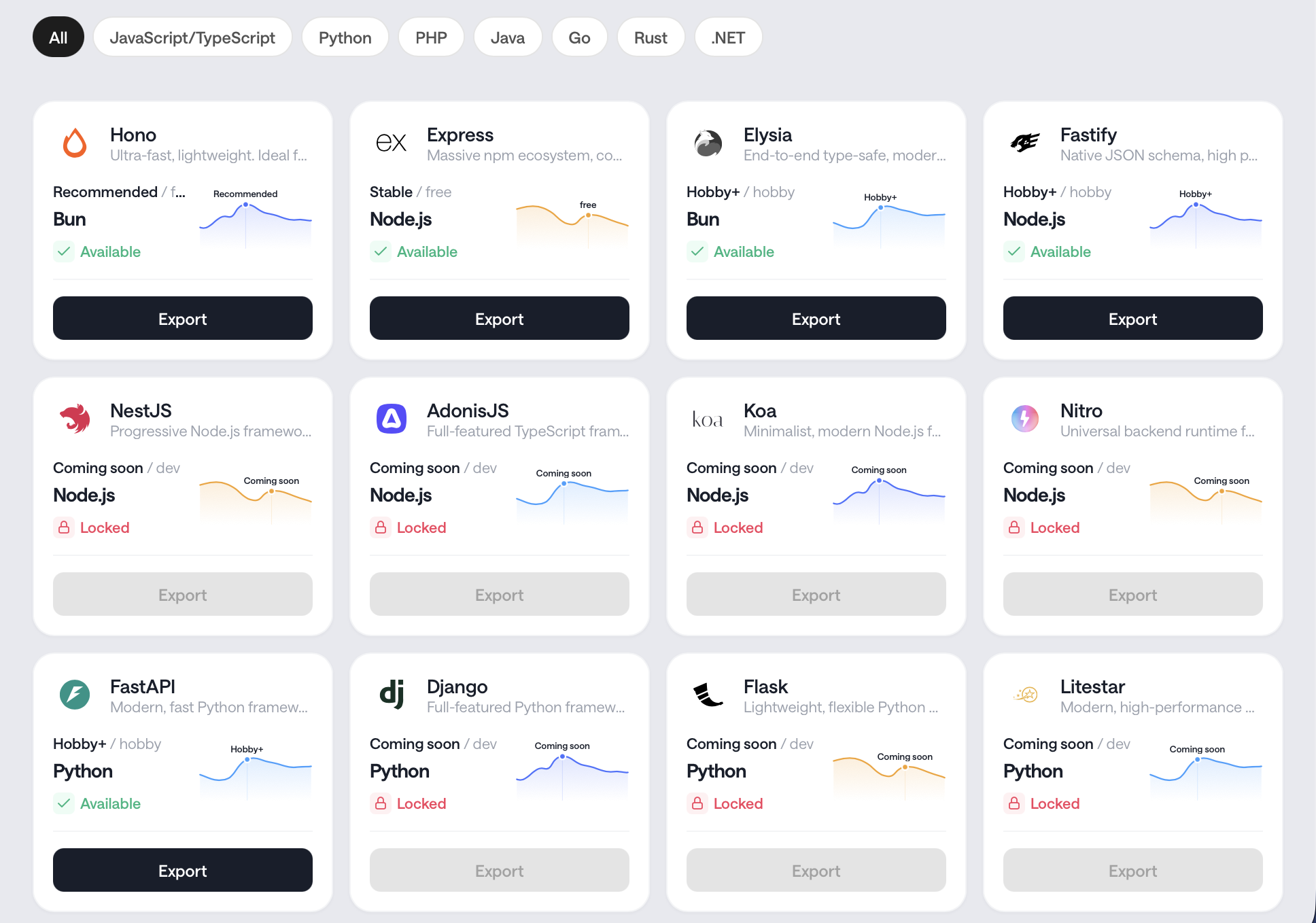
Multi-Framework Generation
Compile the same backend architecture into the framework and runtime that fits your project. Generate real backend projects for Express, Hono, Fastify, Elysia, NestJS, FastAPI, Laravel, and Spring Boot without rewriting the system's core logic for each stack.
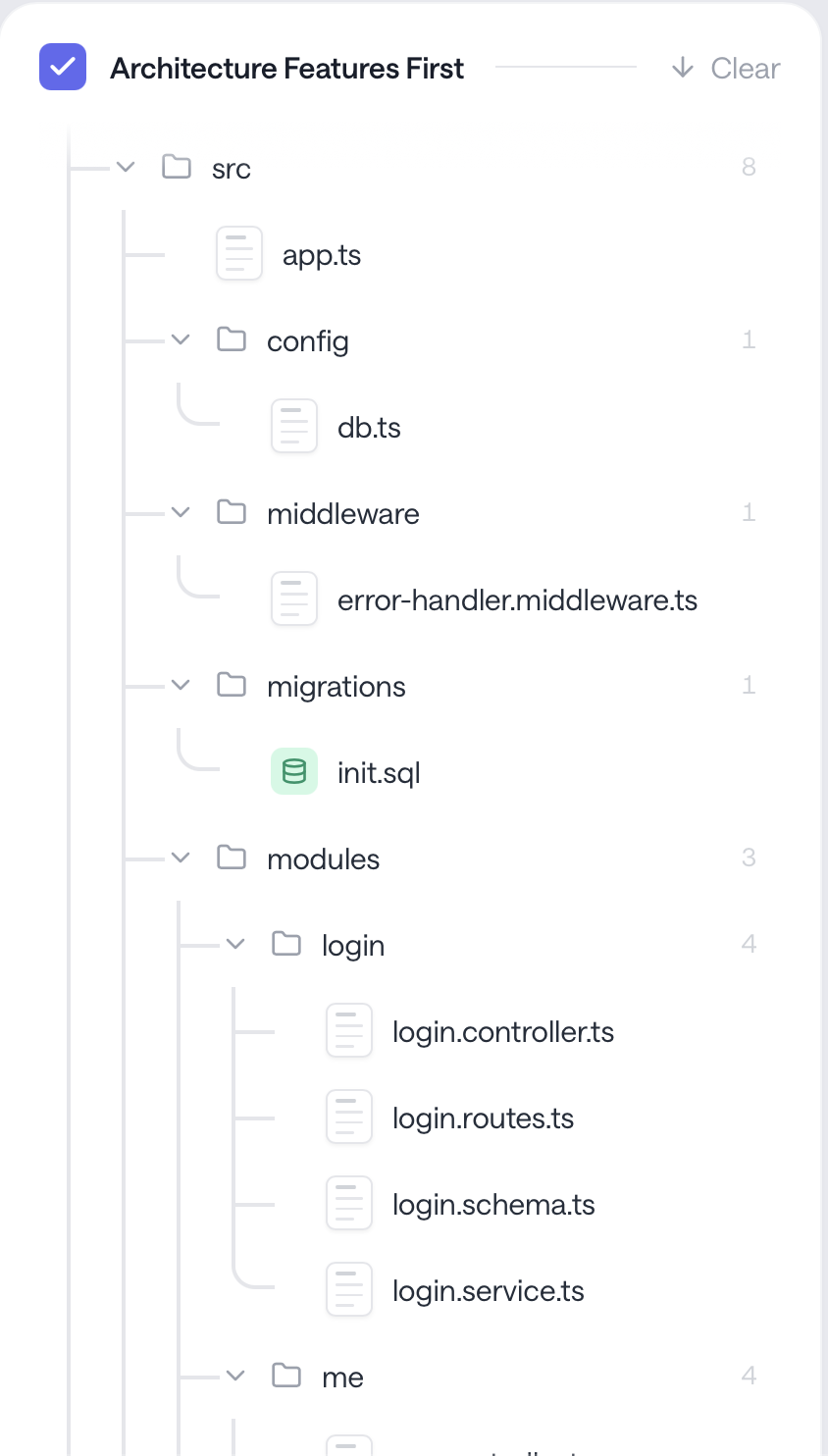
Production-Oriented Architecture
Build beyond isolated endpoints and CRUD operations. Model authentication, validation, error handling, database access, services, business rules, and dependencies as part of a coherent backend architecture designed to evolve with your application.

Modern Developer Experience
Work with a development environment designed for complex backend systems. Navigate large workflows, organize components, use keyboard shortcuts, inspect dependencies, and understand how different parts of your architecture interact without losing sight of the whole system.
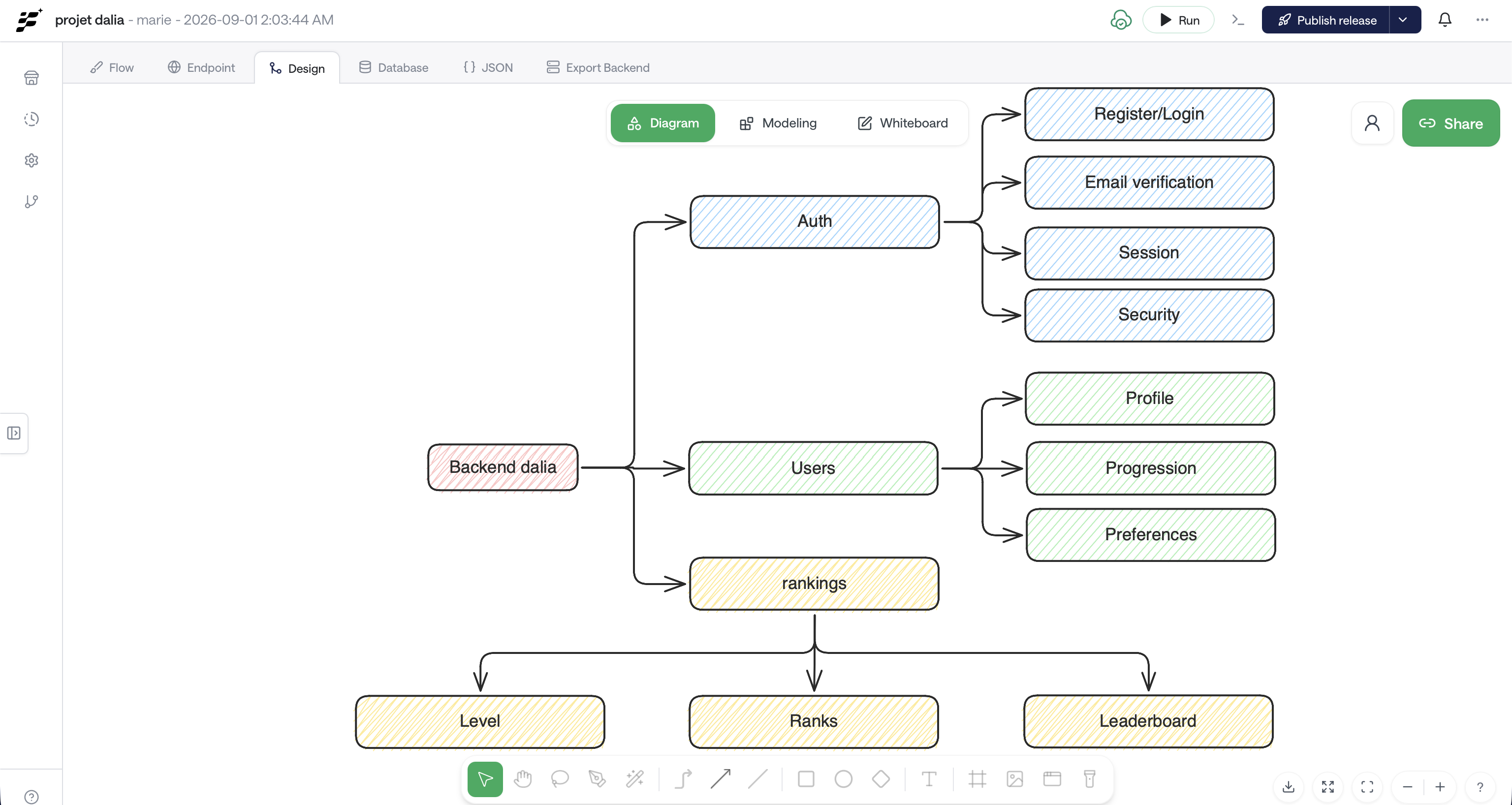
Backend Architecture Design
Design your backend system before committing to its implementation. Define modules, services, dependencies, data flows, routes, and interactions to establish a clear technical structure for monolithic, modular, or distributed architectures.
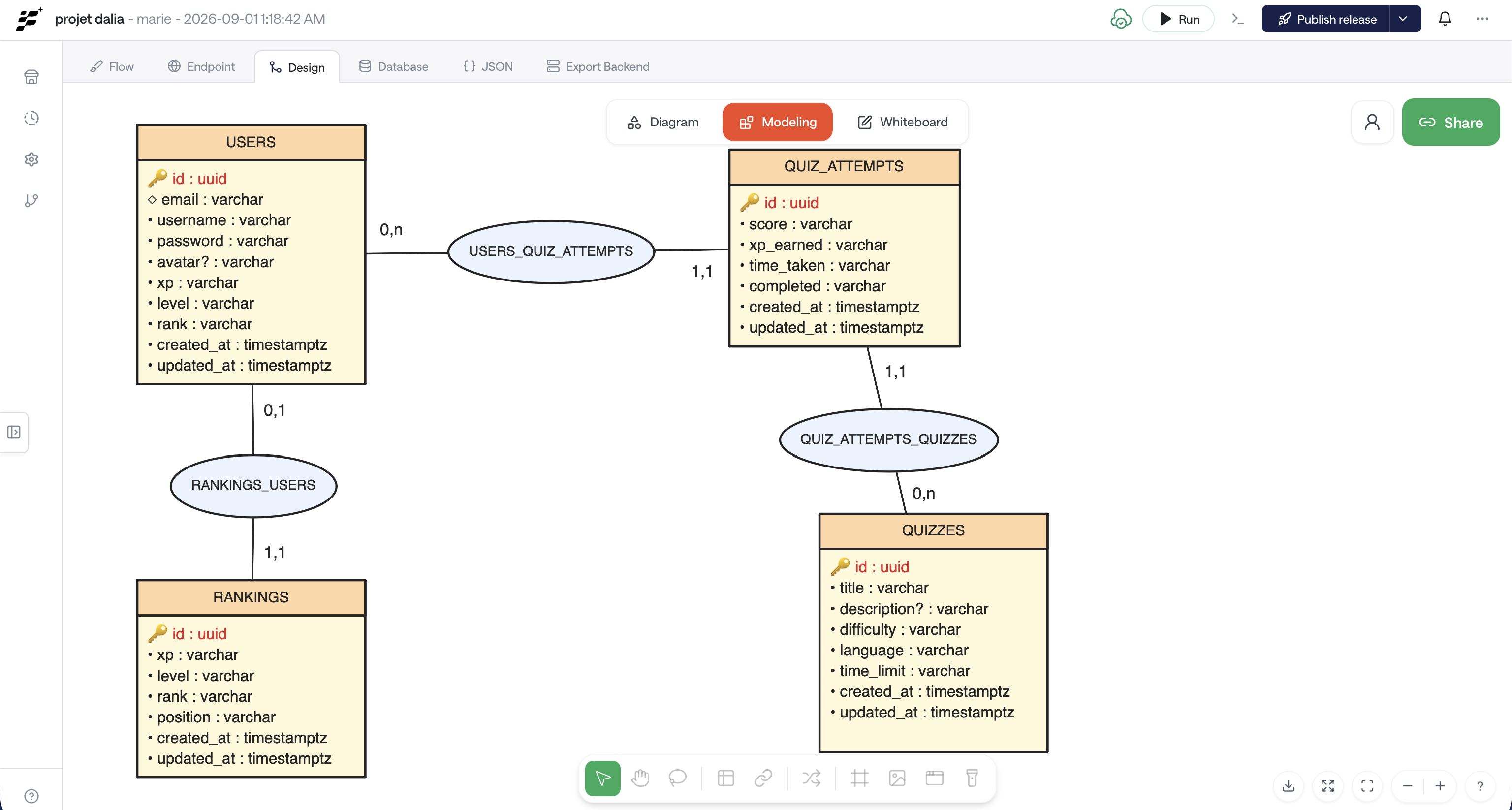
MERISE & UML Design
Connect analysis, architecture, and implementation in the same environment. Model entities, relationships, constraints, and data structures with MERISE, then represent system structure and interactions with UML before connecting those models to your backend implementation.
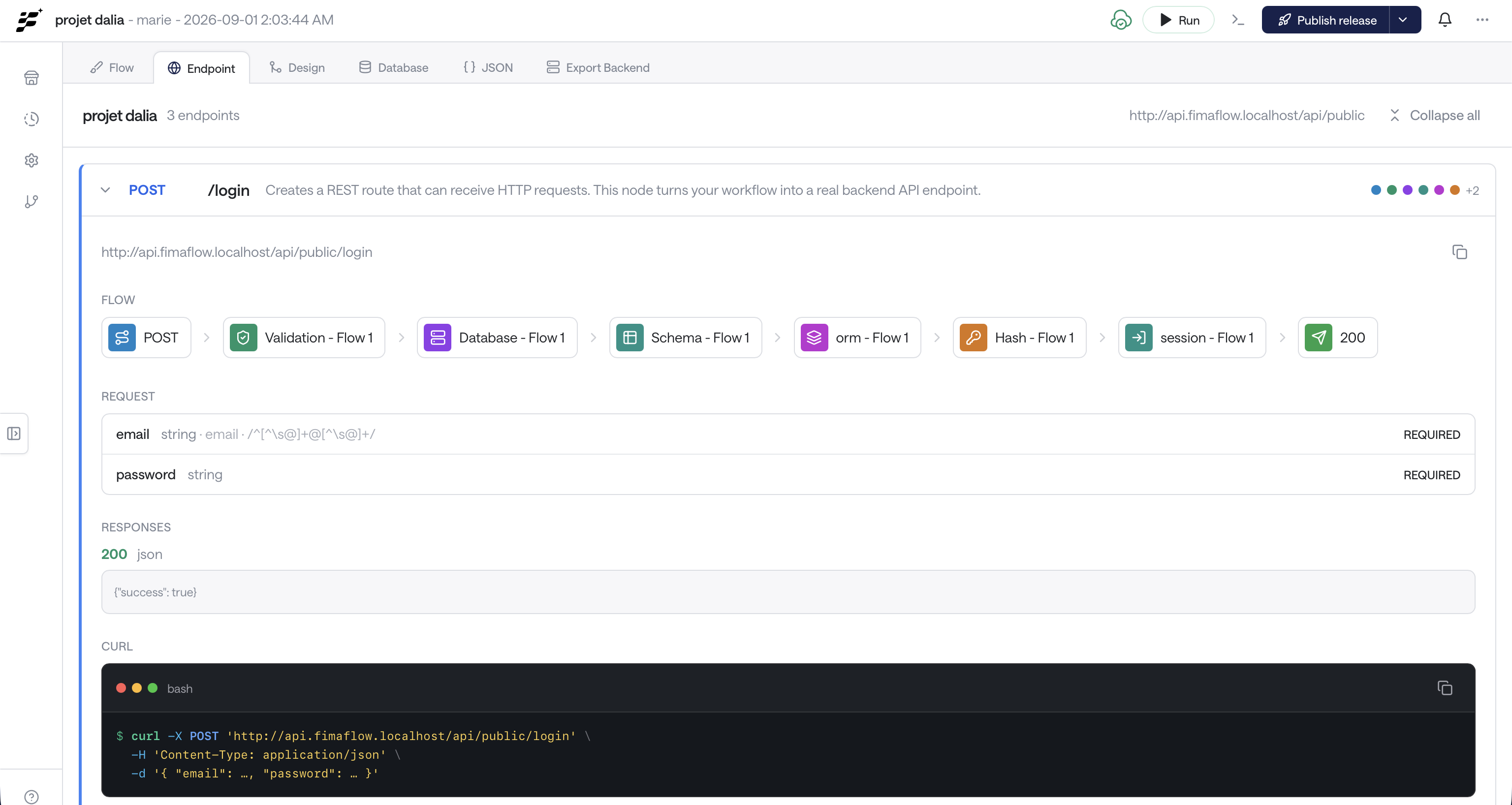
Engineering Documentation
Keep your architecture understandable as the system grows. Document components, workflows, data models, configurations, dependencies, and architectural decisions in context, giving developers a clear reference for building, reviewing, and maintaining the system.
One core, every stack
The engine behind every export. Compatible today with Hono, Express, Fastify, and Elysia — FastAPI, NestJS, Spring Boot, and Laravel are coming soon.
Visual Backend
Design backend architecture visually with flows, APIs, databases, authentication, and business logic in one powerful development environment.
Code Exportation
Transform your visual architecture into production-ready code with the framework and technology stack that fits your project.
Deploy & Run
Build, execute, test, and deploy your backend from a unified environment, from your first workflow to production.



The collaborative workspace for backend teams.
Work on the same visual backend in real time. Share ideas, review workflows, manage versions, and deploy together.
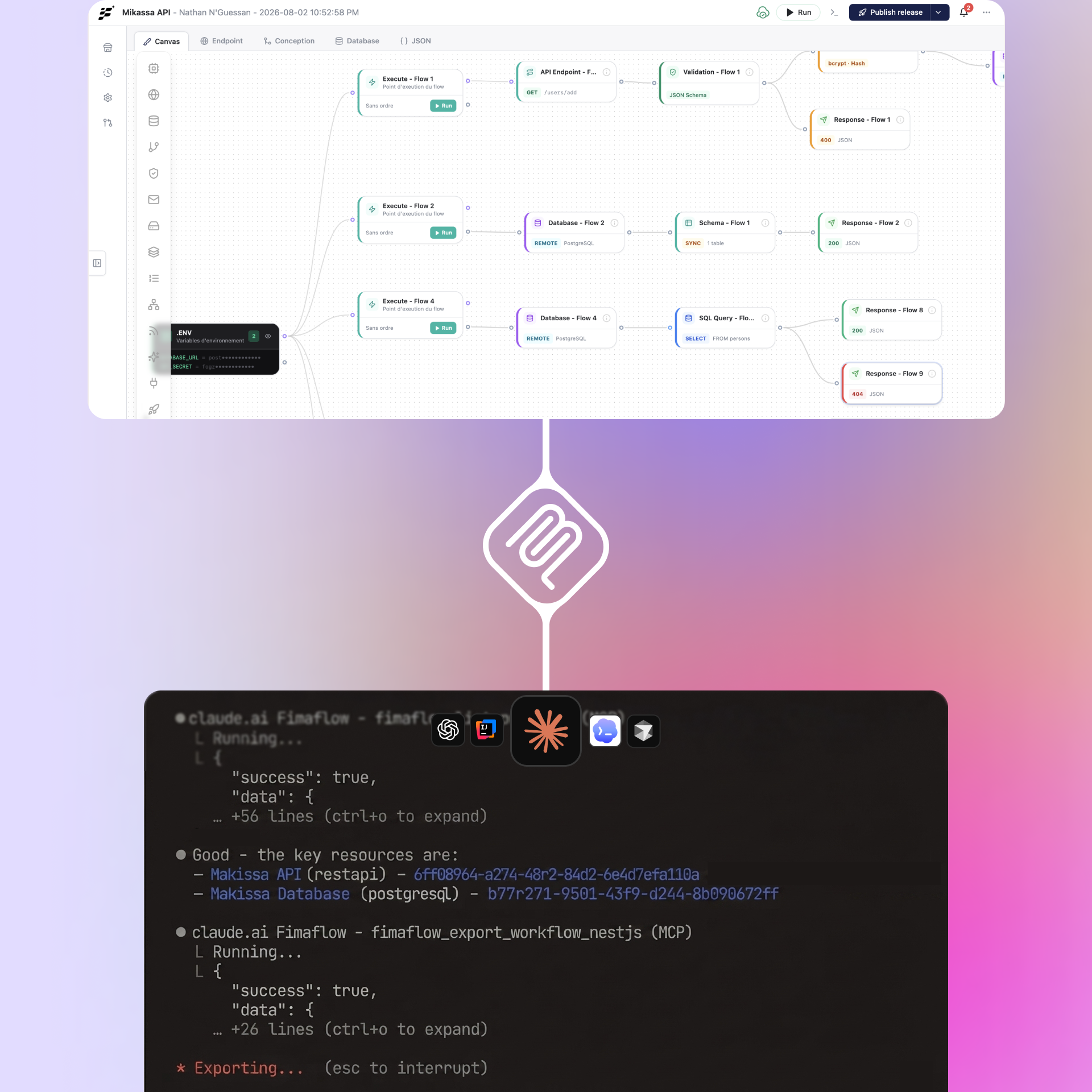
Plug your AI agent straight into the backend you designed.
Every Fimaflow project ships with its own MCP server. Claude, ChatGPT, Cursor or your JetBrains IDE can inspect your workflow, query your resources and export production-ready code — without leaving the editor.
Design Visually.
Build Precisely.
Evolve Freely.
A visual environment where developers design, build, and evolve backend systems. FimaFlow brings architecture, business logic, data, and services together so teams can move from ideas to real, maintainable software — with clarity and control.